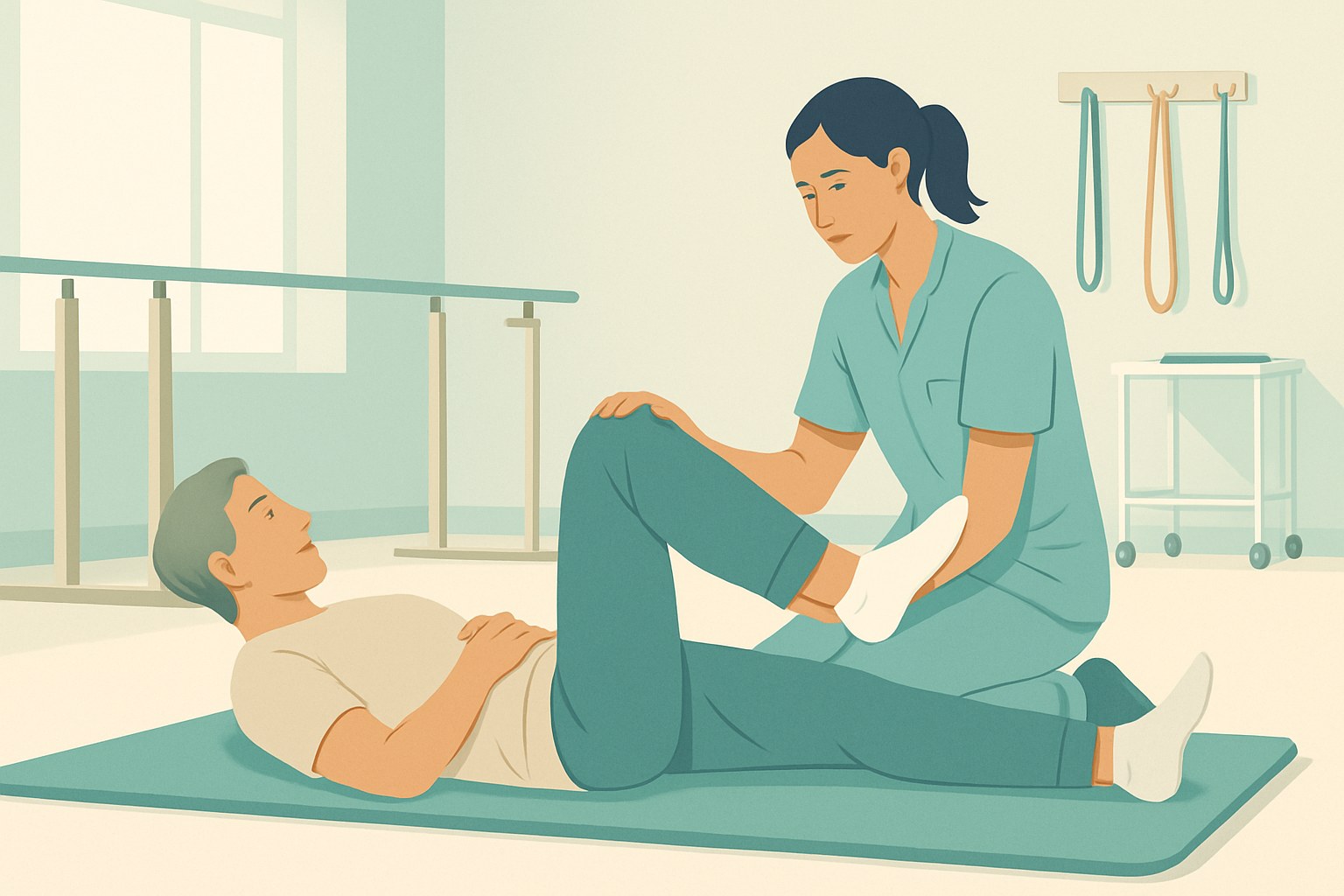
Exercise Program After Knee Replacement: Strong and Fast Recovery

The key to successful recovery after knee replacement surgery is proper and regular exercises. With the advancement of modern surgical techniques, exercise protocols have also become more effective and patient-centered. In this article, I will share with you the importance of post-knee replacement exercises and current approaches.

Why Are Exercises After Knee Replacement So Important?

Muscle Strength and Balance Recovery

Your muscles are weakened after knee replacement surgery. Particularly, your quadriceps (front thigh) muscles rapidly lose strength after surgery. Recent research published in 2023 shows that targeted muscle strengthening exercises started in the early period accelerate functional recovery by up to 40%.

Strong muscles not only make it easier for you to move, but also contribute to the longevity of your prosthesis. Balanced and strong muscles minimize wear by distributing the load on the prosthesis evenly.

Preservation of Range of Motion

Maintaining and increasing the range of motion (joint mobility) in your knee joint during the postoperative period is critically important. Thanks to early mobilization protocols, nowadays most patients can stand up within the first 24 hours after surgery. This approach prevents stiffness development and accelerates recovery.

Reduction of Venous Thrombosis Risk

Regular exercise significantly reduces the risk of clot formation in the legs. Ankle pumping exercises and early mobilization minimize the risk of deep vein thrombosis (DVT) by increasing blood circulation. Modern Enhanced Recovery After Surgery (ERAS) protocols have further reduced this risk.

Post-Surgery Exercise Phases

Early Period (First 2 Weeks)

Exercises Starting in the Hospital:
- Ankle pumping (10 repetitions per hour)
- Isometric quadriceps contractions (20 repetitions per day)
- Knee flexion-extension movements (assisted or passive)
- Hip lifting exercises in bed

Nowadays, with the “same-day surgery” approach, some patients can go home on the day of surgery. Even in this case, your first exercises are started under the supervision of a physiotherapist before going home.

Exercises to Do at Home:
- Standing up from and sitting on a chair (10 repetitions per day)
- Short-distance walks with a walker or crutches
- Knee bending exercises while sitting on the edge of the bed
- Straight leg raise while lying on your back

Middle Period (2-6 Weeks)

During this period, weight-bearing capacity increases and exercises diversify:

  • Stationary bike: 10-15 minutes daily with low resistance
  • Mini squat movements: Light squats leaning against the wall
  • Walking without arm support: With physiotherapist approval
  • Step exercises: Starting with low steps
  • Balance exercises: Standing on one leg (with support)

Late Period (6 Weeks - 3 Months)

Functional Strengthening:
- Pool exercises (aquatherapy): Provides safe movement by reducing the load on the joint
- Muscle strengthening with resistance bands
- Advanced balance exercises
- Increasing walking distance (up to 30 minutes per day)

Robotic rehabilitation devices and virtual reality applications used in modern rehabilitation centers improve exercise quality by increasing motivation during this period.

Full Recovery Period (3-6 Months)

Most patients can fully return to their daily activities within 3-6 months:

  • Low-impact sports: Swimming, cycling, golf
  • Pilates and yoga: With modified movements
  • Strength training: Under expert supervision
  • Walking and light jogging: With doctor approval

Points to Consider While Exercising

Pain Management

Pain is an important signal your body sends you. Mild discomfort during exercise can be considered normal, but if you feel sharp and severe pain, you should stop immediately and consult your doctor.

Thanks to the multimodal pain management approach, postoperative pain control has become much more effective nowadays. This allows exercises to be performed more comfortably.

Swelling Control

Postoperative swelling is normal, but should be kept under control:
- Elevate your leg after exercises (above heart level)
- Apply cold compress (3-4 times a day, 15-20 minutes)
- Use compression stockings (as recommended by your doctor)
- Avoid excessive activity

Gradual Progression

Patience is the key to successful recovery. Progressing too quickly can lead to complications. Stay committed to the program set by your physiotherapist and perform each exercise with correct technique.

Nowadays, thanks to wearable technologies and mobile applications, exercise tracking and progress recording have become much easier. These tools increase your motivation and allow your specialists to monitor the process more closely.

Modern Rehabilitation Approaches

Tele-Rehabilitation

Tele-rehabilitation, which has rapidly become widespread after 2020, offers a more effective follow-up opportunity at home with remote physiotherapy sessions. Your specialist can monitor your exercises and make necessary corrections via video calls.

Robotic and Technology-Assisted Exercise

In advanced rehabilitation centers:
- Robotic walking systems: Re-teach the correct walking pattern
- Virtual reality applications: Increase motivation by gamifying exercise
- Biofeedback systems: Visually show whether your muscles are working correctly
- Wearable sensors: Continuously monitor your activity level and exercise quality

Enhanced Recovery After Surgery (ERAS) Protocols

ERAS protocols are a set of evidence-based approaches applied before, during, and after surgery:
- Preoperative exercise programs (prehabilitation)
- Tissue-preserving techniques during surgery
- Early mobilization and nutrition
- Multimodal pain management

This approach shortens hospital stay and accelerates recovery by 25-30%.

Recommendations for Long-Term Success

Stay Active for Life

Exercise after knee replacement is not limited to the first months only. To ensure the longevity of your prosthesis and maintain a high quality of life, you should make regular exercise part of your lifestyle.

Recommended regular activities:
- Walking for 30 minutes daily, at least 5 days a week
- Strengthening exercises 2-3 times a week
- Flexibility and balance work
- Low-impact aerobic activities

Activities to Avoid

You should stay away from some activities to protect your prosthesis:
- High-impact sports (running, tennis, basketball)
- Excessive weight lifting
- Staying in squatting position for long periods
- Skiing and contact sports

Weight Control

Maintaining your ideal weight is critical for prosthesis longevity. Each kilogram of excess weight creates 4-6 kg of extra load on your knee. Maintain your ideal weight with balanced nutrition and regular exercise.

Physiotherapist and Doctor Follow-up

Success after knee replacement comes with teamwork. For regular check-ups:

First 3 months: Physiotherapist check-up every 2 weeks
3-6 months: Monthly evaluations
6-12 months: Check-up every 3 months
After 1 year: Annual orthopedic check-up

With these check-ups, your progress is evaluated, your exercise program is updated, and potential problems are detected early.

Conclusion

Knee replacement surgery is a successful treatment method that can significantly improve your quality of life. However, this success is made possible by regular and correct exercises you will do during the postoperative period. Thanks to modern rehabilitation techniques and protocols, the recovery process has become faster, more comfortable, and more effective.

In close collaboration with your physiotherapist and orthopedic specialist, continue your exercise program with patience and determination. Every patient is different, and staying committed to the program specially prepared for you will ensure you get the best results.

Do not neglect your post-knee replacement exercises for a more active, pain-free, and quality life. Remember: Every exercise you do today is an investment for easier movement tomorrow.


Medical Disclaimer: The information contained in this article is for general informational purposes only and does not replace professional medical advice, diagnosis, or treatment. Your exercise program after knee replacement surgery should be specifically determined by your specialist doctor and physiotherapist according to your personal health condition, type of surgery, and recovery rate. Always consult your doctor before starting any exercise program. If you experience pain, swelling, or any unexpected condition, seek medical attention immediately.