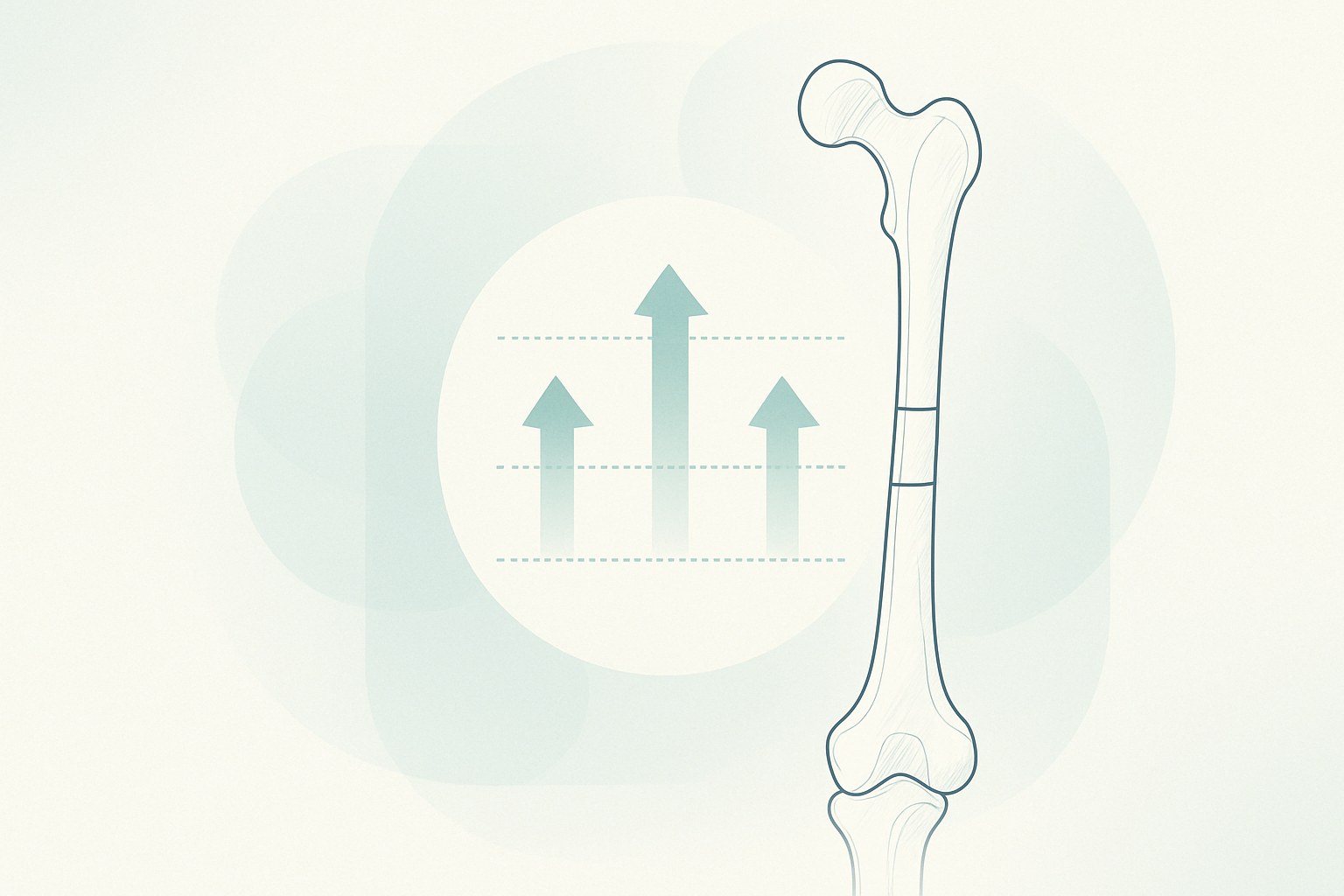
Most people who desire limb lengthening surgery are dissatisfied with their body appearance. Body image is the way we perceive ourselves. Whether our height is tall or short is related not only to how many centimeters tall we are, but also to how we perceive ourselves according to our torso and leg proportions.
By examining the distribution of height in society, we can evaluate the average height of the population and determine who is taller or shorter compared to the general population. According to studies, the average height is 173 cm for men and 163 cm for women. The lower limit of normal height is 166 cm for men and 153 cm for women. Heights below these are considered short stature. However, what is truly important is how the person perceives themselves.
Limb Lengthening Surgical Techniques
Limb lengthening is performed using the “distraction osteogenesis” method (stretching the soft bone tissue (callus) formed during the healing period of a controlled fracture created in the bone at a rate of 1 mm per day, and formation of normal bone tissue after lengthening is completed). External fixators were initially used to stretch the callus tissue. To reduce complications, the lengthening over nail (LON) method, where a nail placed inside the bone is used for lengthening, was developed. Nowadays, limb lengthening can be performed more comfortably using lengthening nails that are completely placed inside the bone.
Lengthening Methods
There are 3 phases in limb lengthening. The first phase is 5-7 days after surgery. During this period, soft callus tissue is expected to form at the fractured bone. The second phase is the lengthening phase. Lengthening is performed at 1mm per day. The third phase is the bone consolidation phase after lengthening is completed. Studies show that bone consolidation requires an average of 1.12 (0.87-1.71) months per 1 cm of lengthening. For example, a total of approximately 5-6 months is needed for 5 cm lengthening and bone consolidation in the femur (thighbone). There are methods to lengthen the bone according to these principles. In early times, lengthening was performed with the Ilizarov external fixator. Methods were developed to reduce the time the external fixators remain on the patient’s leg. The first of these is the combined system. In the combined system, an intramedullary nail used in normal fractures is placed inside the medullary cavity (the hollow space inside the bone). One side of the nail is locked. A unilateral external fixator is placed to enable lengthening outside the leg. The patient is taught how to perform lengthening with the placed fixator. The patient lengthens their leg 4 times a day at 0.25mm each time. After leg lengthening is completed, under operating room conditions, screws are inserted into the lower part of the nail placed inside the bone to lock it, and the external fixators are removed. The nail inside the bone bears the load until the bone consolidates.
As a second method, lengthening nails were developed. These nails consist of two telescoping tubes and mechanisms that enable the nail to lengthen. In the first nails, the patient mechanically lengthened by performing certain exercises. Subsequently, a nail operated by an electric motor placed inside the nail was produced. After these nails, magnetic nails were developed. When this nail is used, since it cannot bear the patient’s full weight, the patient must not put weight on their leg during lengthening and until the bone consolidates. Finally, the Stryde nail produced by the same company is made of reinforced steel, allowing the legs to bear weight. With these nails, patients’ recovery process is shorter.
Medical Disclaimer: This content is for informational and educational purposes only. It should not be considered as medical advice, diagnosis, or treatment recommendations. Always consult with a qualified healthcare professional or orthopedic specialist regarding any medical condition or treatment options. Individual results may vary, and all surgical procedures carry risks that should be discussed with your physician.