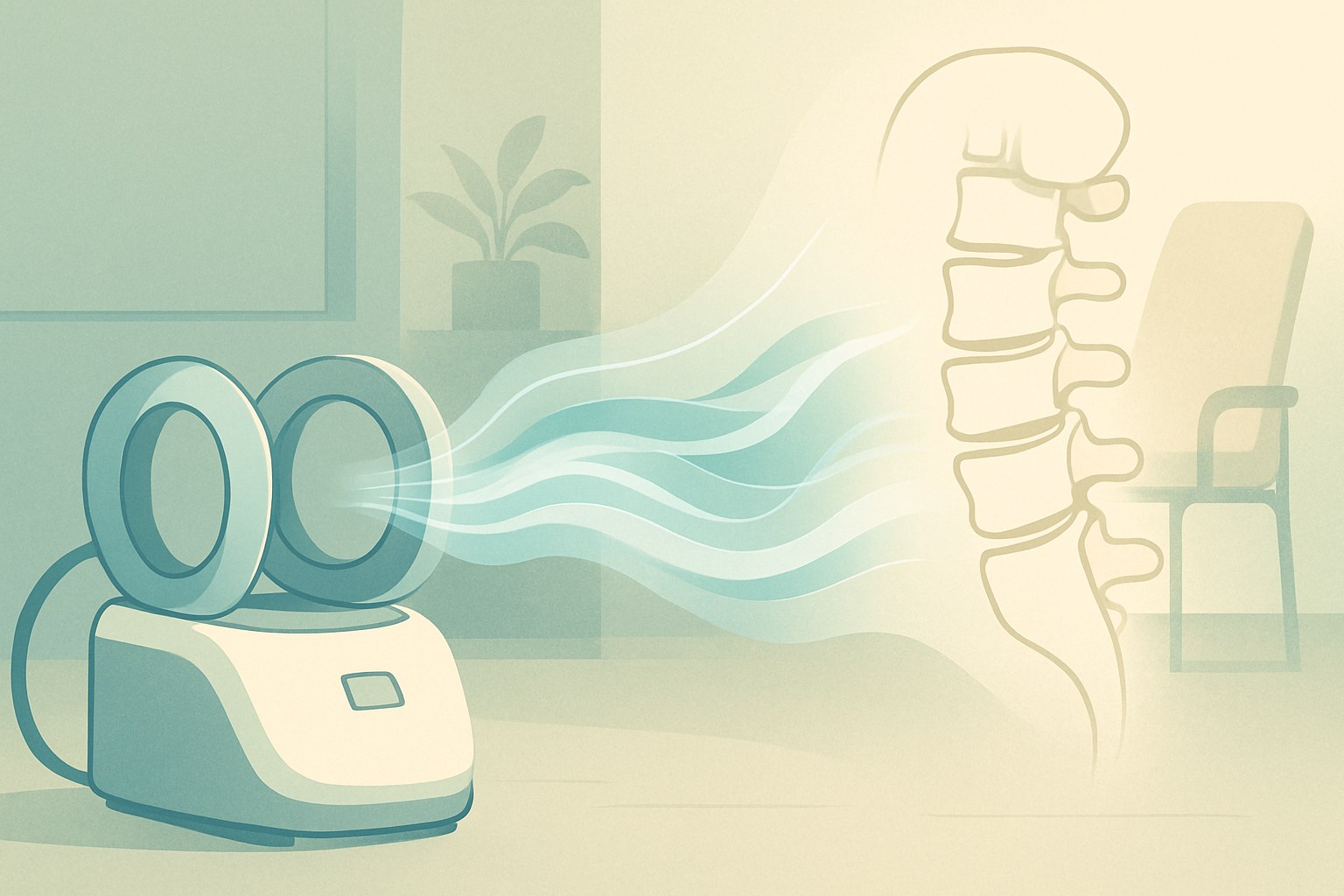
Sudden lower back spasms are a painful condition resulting from sudden and excessive contraction of the muscles in the lumbar region. Lower back spasms can lead to movement restrictions, postural abnormalities, and decreased quality of life. Different methods can be used in the treatment of lower back spasms. One of these is the high-intensity magnetic field therapy system called Super Inductive System (SIS).
SIS aims to benefit from the effects of electromagnetic waves generated by a high-powered coil on the human body. This technology creates therapeutic effects such as pain relief, muscle relaxation, muscle strengthening, fracture healing, circulation enhancement, and spasticity reduction. SIS is a deep-acting system that can be used completely without touching the patient, can be applied over clothing, and can reach up to 2.5 Tesla power.
In the treatment of lower back spasms with SIS, muscle facilitation or strengthening effect occurs through electromagnetic energy causing nerve depolarization and muscle contractions. Additionally, the high-intensity electromagnetic field increases blood circulation in the treatment area and supports vascularization, thereby reducing pain and accelerating the healing process.
In the treatment of lower back spasms with SIS, it is possible to say that it is safer compared to manual therapy. Because SIS does not apply any pressure or stretching to the patient, it only acts through electromagnetic waves. In this way, it becomes possible to treat the patient without increasing pain or risk of joint or disc damage. SIS is also a method that can be applied faster and more easily compared to manual therapy.
In conclusion, SIS offers a safer, more effective, and more practical alternative compared to manual therapy in the treatment of lower back spasms. If you would like to try SIS treatment for lower back spasms, we welcome you at our clinic.
Medical Disclaimer: This content is for informational and educational purposes only and does not constitute medical advice. Lower back spasm diagnosis and treatment should be individualized based on a physician’s evaluation. Please consult your orthopedic specialist or healthcare provider before starting any treatment. Treatment outcomes may vary from person to person.