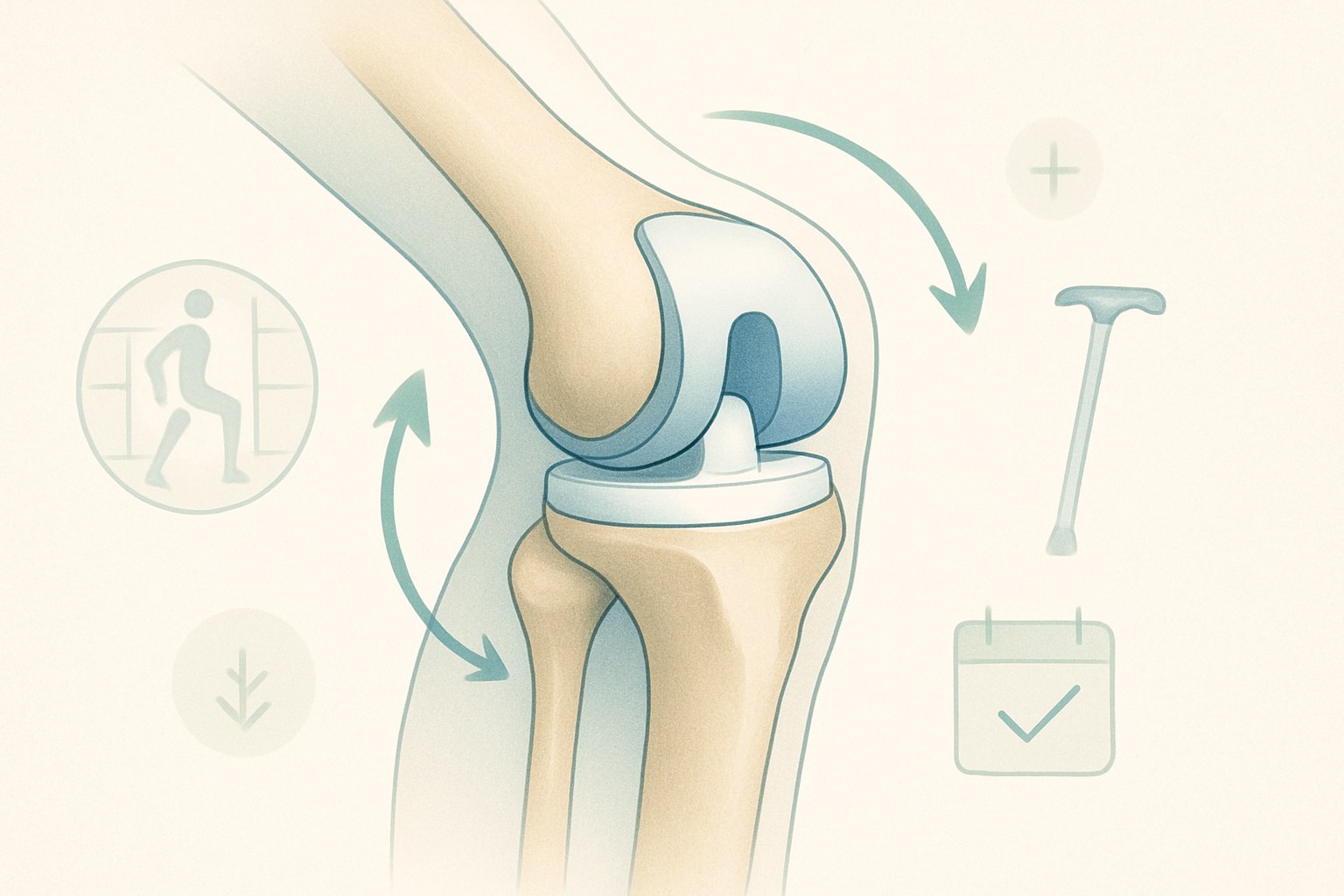
Patients with gonarthrosis (knee joint osteoarthritis) experience reduced walking distances throughout the day. When they want to visit their nearest neighbor, they will need to sit down and rest several times along the way due to pain. Over time, these pains will begin to occur even when sitting at home. If these pains have started to disrupt their sleep, it means the time has come for knee replacement surgery. After examining the patient who presents with these complaints and evaluating the X-ray films taken, the orthopedics and traumatology specialist will recommend knee replacement surgery. In this article, we will discuss what patients should pay attention to after knee replacement surgery.
The knee replacement surgery has been performed and the patient has been transferred to their bed. During this period, applying ice around the knee joint will be beneficial to prevent excessive bleeding in the patient’s knee. If a drain (a system placed to allow blood to flow out from the wound area) has been placed after surgery, it is monitored by the nurse at regular intervals and emptied when the reservoir is full. Some specialists may not use drains in these operations. If the patient keeps their knee constantly bent due to pain, they will have difficulty straightening their knee later. For this reason, it is important for the patient to keep their leg straight in the early postoperative period. If necessary, several pillows can be placed under the patient’s foot to straighten the knee joint.
One day after surgery, during the morning round, the doctor shows the patient how to walk with the help of a walker. In knee replacements performed without any problems, the patient can walk with full weight bearing on their leg. From this point on, the patient can go to the bathroom with the help of a walker. If these patients have no additional problems, they should not use or request a urinary catheter or adult diaper under any circumstances. The patient who has been taught to walk is started on exercises by their doctor to strengthen the muscles around the knee. A second set of exercises are those necessary for bending the knee joint. The patient should work on exercises that enable knee bending as much as they perform muscle strengthening exercises.
On the first day, patients’ pain will have decreased considerably. The patient’s wound dressing is changed and, depending on their pain level, they may be discharged home one day after surgery. The patient who goes home should continuously perform the exercises given to them. When they have pain, they should use the painkillers prescribed by their doctor. The patient can take care of their own needs at home. They can use a walker or cane as an assistive device for walking. Some patients may discontinue these assistive devices early as their pain decreases. Patients who still have pain should continue to use a walker or cane for the duration recommended by their doctors.
The patient discharged home needs to have their dressing changed every other day. It would be more appropriate for a healthcare worker to perform the dressing change. The important point to note during dressing changes is that the gauze pads must be sterile (free of microorganisms). Applying the tapes over the dressing while the knees are bent will not restrict the patient’s ability to bend their knee. Fifteen days after surgery, the patient should go for a follow-up appointment with the surgeon who performed the operation. The dressing is checked by the doctor and the sutures are removed. The patient’s walking and how much they can bend their knee are evaluated. It is tested whether the patient needs an assistive device for walking. Most patients are able to manage their daily lives without needing an assistive device after 45 days. Patients with weak muscles around the knee, those who are non-compliant with exercises, and those who have difficulty bending or straightening their knee are referred to physical therapy and rehabilitation.
Another important issue is the possibility of blood clot formation in the leg veins of patients who have undergone knee replacement. Although this event is rare, precautions should be taken in every patient. It is recommended that patients wear compression anti-embolic (anticoagulant) stockings up to below the knee level. Injectable medications or pills recommended by the doctor to prevent clotting should be taken every day for 15 days. Any swelling or redness that occurs in the calf area must be reported to the doctor.
The purpose of knee replacement is to enable the patient to walk pain-free. As an orthopedics and traumatology specialist, the most important advice I give to my patients who undergo knee replacement is to walk as much as they can.
Medical Disclaimer: This content is for informational and educational purposes only and does not constitute medical advice. Always consult with a qualified healthcare professional regarding any medical condition or treatment decisions.