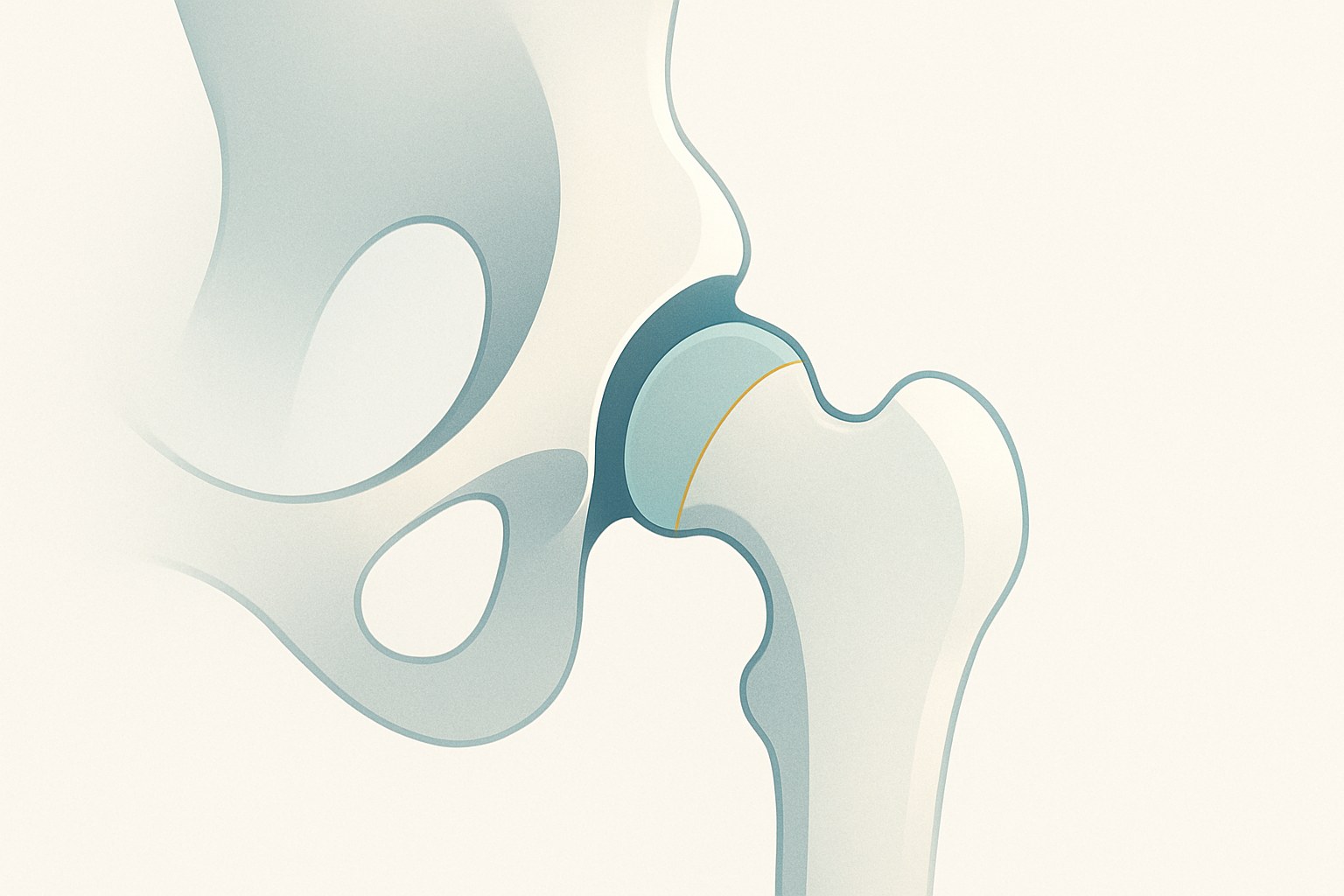
Hip pain is commonly seen as a result of many disorders. The location of the pain in the hip provides information about the cause of the pain. Pain in the hip joint generally causes pain radiating to the inner thigh and groin area. Pain on the outer side and back of the hip is generally caused by muscles, tendons, ligaments, and soft tissues surrounding the hip. In some cases, patients may feel pain in their hip as a result of problems in their knee or lower back. Hip area pain can result from injuries to soft tissues around the hip, fractures and dislocations occurring in the hip, nerve compression around the hip, hip osteoarthritis (calcification), avascular necrosis (bone death resulting from decreased blood supply to the femoral head), osteomyelitis (bone infection), osteoporosis, and cancer.
There are strong ligaments and strong muscles around the hip. After exercises, with awkward movements, excessive walking or running, or after trauma, strains and small tears can occur in these muscles, tears can occur in ligaments, or aseptic inflammation can develop in tendons that connect muscles to bone. These pains are generally felt on the side of the hip. Some accidents, especially falls from height, cause fractures in the femur (thigh bone) and dislocations in the hip joint. In elderly people, spontaneous hip fractures can occur as a result of osteoporosis. Hip pain can develop as a result of these conditions. Hip pain develops as a result of nerve compression around the hip. These pains generally radiate to the leg.
Hip osteoarthritis (calcification) pain is generally felt on the inner side of the hip. This pain increases with walking. Hip osteoarthritis can develop as a result of rheumatic disorders, previous hip fractures, deformities in the shape of the hip joint, untreated congenital hip dislocation, and most commonly from primary causes, which are unknown. To relieve hip osteoarthritis pain in young ages, measures include losing weight, strengthening hip muscles, and performing surgeries aimed at reducing pain. In advanced ages, hip replacement (hip prosthesis) as treatment relieves the patient from their problems.
Bone death can develop as a result of impaired blood supply to the femoral head (thigh bone head). This is called avascular necrosis of the femoral head in medicine. In some patients, the cause cannot be fully understood. Corticosteroid use and alcohol use can cause this disorder. Treatment includes avoiding weight bearing on the hip for a long period and hyperbaric oxygen therapy. In advanced cases, revascularization surgeries can be performed on the hip. If the damage to the femoral head is extensive, the hip progresses to osteoarthritis (calcification) over time, and hip replacement becomes inevitable as treatment.
In mild hip pain, the patient should first rest. As rest, they should reduce weight bearing on the painful hip and should not lie on the painful hip. It is beneficial to use simple analgesics to relieve mild hip pain. Ice application can be applied to the painful hip. For some pains, heat application can be applied to relax muscles, and the hip can be relieved with stretching exercises.
When should you see a doctor? In some cases, you should see a doctor immediately for hip pain. If hip deformity has developed, if there is difficulty moving the leg or hip, if you cannot bear weight on the painful hip, if intense pain occurs, if sudden swelling and redness have developed, if there is pain in the hip with fever and chills, the patient must consult an orthopedics and traumatology doctor.
Hip pain makes it difficult for a person to walk and in some cases also affects sitting. Hip pain has many causes. Be sure to consult a specialist doctor for persistent, non-resolving pain in your hip.
Medical Disclaimer: This content is for informational and educational purposes only. It is not intended to replace professional medical advice, diagnosis, or treatment. Always consult your orthopedic surgeon or qualified healthcare provider with any questions you may have regarding hip pain or any medical condition. Never disregard professional medical advice or delay seeking it because of information you have read here.