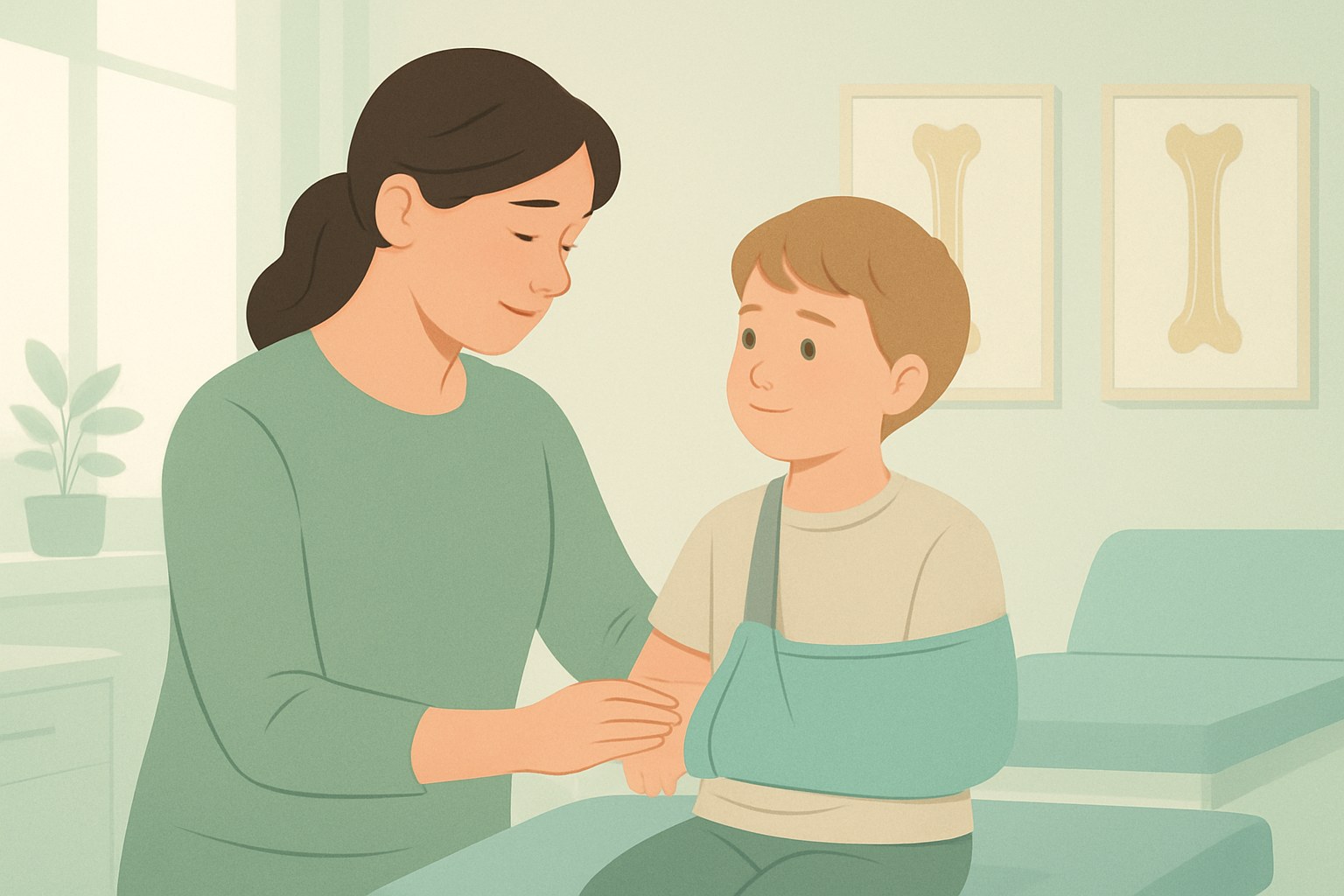
Children are generally very active, so they have a high likelihood of breaking their arms and legs when playing or doing sports. Pediatric fractures differ from adult fractures. Most of them are benign fractures and heal quickly. However, unlike adults, children have growth plates (physes). Fractures occurring in these growth plates can cause growth disturbances in the child’s leg or arm. Therefore, in case of any fracture in your child’s arm or leg, it is essential to consult a specialist in orthopedics and traumatology. This article is about what families should do in case of pediatric arm and leg fractures.
First, you should urgently take your child to a hospital where an orthopedics and traumatology specialist is available. Immobilizing the child’s fractured extremity in an appropriate position with the help of cardboard prevents the fracture fragments from causing more damage to surrounding tissues and helps reduce the child’s pain. Especially for fractures around the elbow, since emergency intervention is required and surgical intervention may be necessary, you should not give your child any food or water while taking them to the hospital.
After your child is examined by an orthopedics and traumatology specialist, they will explain the treatment method and treatment process to you. Most pediatric fractures will be treated with a cast applied to the arm or leg. After the cast is applied, parents need to monitor the fingers periodically for the first few days to prevent circulatory disorders that may occur in the arm or leg. Purple discoloration of the fingers, or excessive paleness, and the child having more pain than they can tolerate are warning signs of circulatory disorder. In such a situation, you should urgently (regardless of day or night) contact your doctor. With a simple intervention by your doctor, the circulation of the arm or leg can be corrected. However, if delayed, the consequences can lead to loss of the arm or leg.
Another important issue is that children get bored at home during this period. Putting the child in front of the television to watch TV all day or giving them a tablet to constantly spend time with these is not a good option. You can play games like puzzles with the child, or invite the child’s friends over to ensure they have a good time.
Be sure to attend the x-ray follow-up appointments specified by your doctor. If there is displacement in the fracture, your doctor will correct it. When the cast is removed, it is quite normal for the child’s arm or leg to be thinner compared to the other arm or leg, and this will improve over time. You can help your child overcome their fears by encouraging them to use their fractured arm or leg. Usually, one week after the cast is removed, everything will be back to normal. I wish you healthy days.
Medical Disclaimer: This content is for informational and educational purposes only and does not constitute medical advice. Always consult a qualified healthcare professional for diagnosis and treatment of any medical condition.