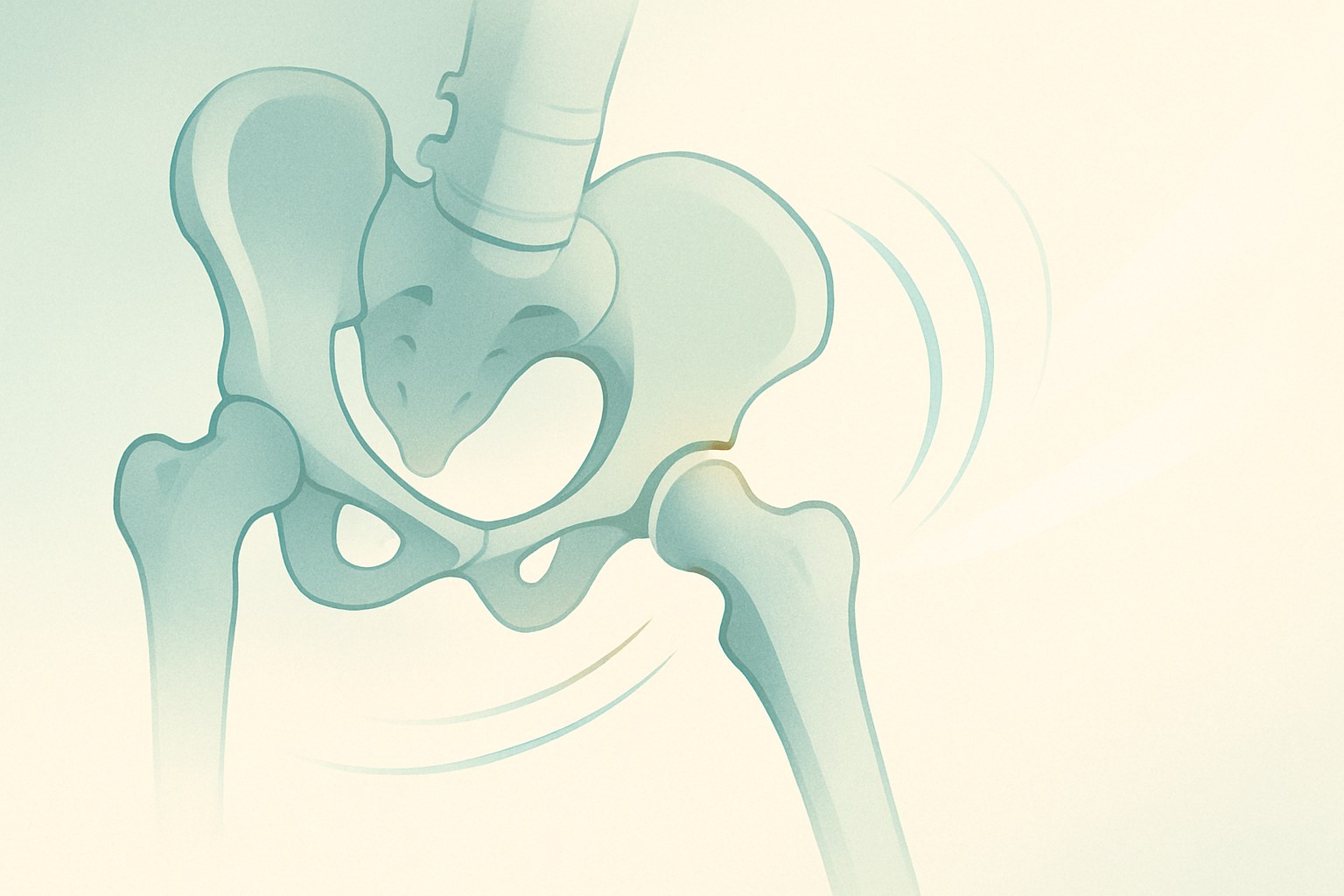
Minimally invasive hip replacement (hip arthroplasty) is a surgical approach that is becoming increasingly widespread today. Particularly through anterior (front), posterior mini-incision, and superior capsule-sparing techniques, patients’ postoperative experiences have significantly improved. Here are the main advantages of minimally invasive hip replacement:
1. Smaller Incision and Less Tissue Damage
Minimally invasive techniques require a smaller incision of 8-12 cm compared to the traditional 20-25 cm incision. More importantly, the fundamental philosophy of the surgery is not just incision size, but also muscle and soft tissue preservation. Particularly with the anterior approach, surgery can be performed by working between muscles without cutting them, which minimizes tissue damage and accelerates healing.
2. Less Blood Loss and Transfusion Need
Minimally invasive surgeries generally result in less blood loss due to reduced tissue damage. In modern techniques:
- Use of tranexamic acid
- Application of controlled hypotension
- Advanced cautery and coagulation systems
Thanks to these methods, the need for blood transfusion has decreased to below 1-2%. Patients using their own blood positively affects the postoperative recovery process.
3. Shorter Hospital Stay and Rapid Mobilization
Currently, following minimally invasive hip replacement surgeries:
- Patients can be mobilized on the day of surgery or the next day
- Hospital stay has been reduced to 1-3 days
- Some centers even implement “same-day discharge” protocols
- Recovery process is optimized with Enhanced Recovery After Surgery (ERAS) protocols
Early mobilization reduces the risk of venous thrombosis and allows patients to return to their normal daily activities more quickly.
4. Less Pain and Comfortable Recovery
Minimally invasive techniques, due to muscle and soft tissue preservation:
- Postoperative pain is significantly reduced
- Opioid requirement is minimized
- Pain is controlled with multimodal pain management protocols (local infiltration analgesia, blocks)
- Patients experience a more comfortable recovery process
- Adaptation to physical therapy programs is easier
5. Lower Complication Risk
Advantages provided by minimally invasive surgeries:
- Infection risk: Smaller incision and shorter hospital stay reduce the risk of wound infection (below 1%)
- Dislocation risk: A stable hip joint is achieved thanks to soft tissue preservation
- Wound complications: Better cosmetic result and wound healing
- Venous thromboembolism: Risk decreases with early mobilization
6. Faster Functional Recovery
Current data shows that with minimally invasive techniques:
- Patients can return to daily activities within 2-4 weeks
- Can begin sports activities after 6-8 weeks
- Muscle strength and walking capacity are gained more rapidly
- Time to return to work is shortened
Approach Enhanced by Modern Technologies
Technologies supporting minimally invasive hip replacement today:
- Robotic surgical systems: Provide more precise bone cuts
- Computer-assisted navigation: Optimizes component placement
- 3D planning software: Enables detailed preoperative planning
- Specially designed instruments: Enable effective work through small incisions
Who Is It Suitable For?
Although minimally invasive hip replacement is suitable for most patients:
- It is ideal for normal or slightly overweight patients
- Traditional methods may be preferred in cases of severe obesity, severe deformity, or revision cases
- Each patient’s condition should be evaluated individually
- Surgeon’s experience and patient selection are critically important for success
Conclusion
Minimally invasive hip replacement is one of the finest examples of modern orthopedics’ patient-centered approach. It offers faster recovery, less pain, shorter hospital stay, and better functional outcomes. However, remember that each patient’s condition is different and the surgical method should be determined according to your specific situation. Therefore, it is important to consult with an experienced orthopedic and traumatology specialist to determine the most appropriate treatment option for hip replacement.
Medical Disclaimer: This blog post is for general informational purposes only and does not substitute for medical advice. For hip pain, limited mobility, or hip replacement needs, you must consult an orthopedic and traumatology specialist. Your diagnosis and treatment plan should be determined by your physician according to your personal health condition.